Don’t Leave Without Getting the Support You Need!
👉 Take the first step — send your request now!

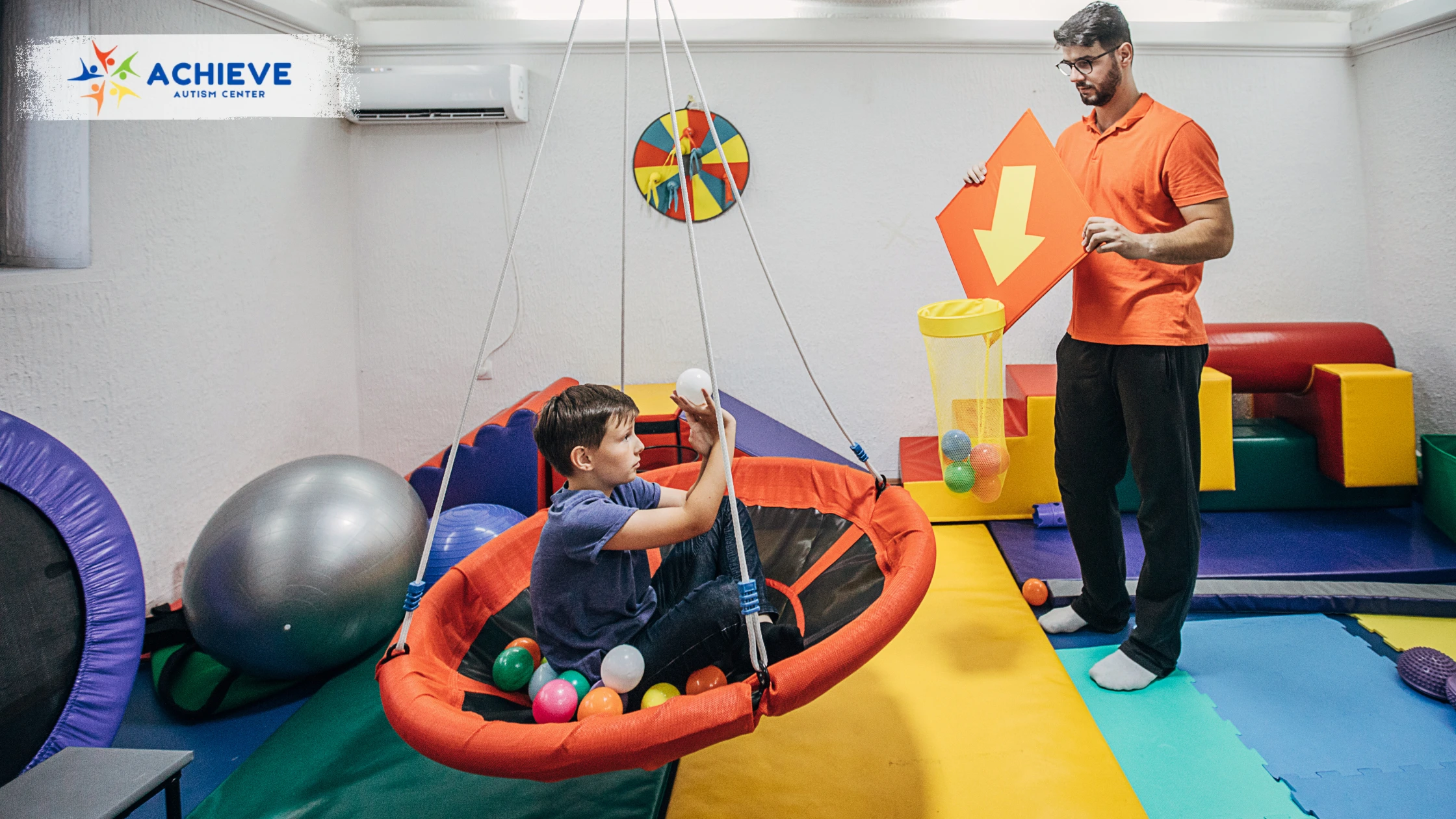
Children on the autism spectrum face daily challenges, and sensory-friendly public spaces play a major role in shaping how they move, learn, and interact with the world. Yet most schools, malls, airports, and clinics still lack sensory-aware planning—creating environments that are overwhelming, inaccessible, and emotionally exhausting for them. These overlooked barriers deeply affect their ability to participate, explore, and thrive in regular public settings. In this guide, we uncover the hidden mechanisms of sensory overload and why the urgent need for sensory-friendly public spaces can no longer be ignored.
For a child with autism, the world is often too loud, too bright, too chaotic, or too unpredictable. Sensory-friendly public spaces make navigation safer, calmer, and more inclusive—yet they’re missing in most everyday environments. When schools, malls, airports, and clinics overlook sensory planning, children experience distress, meltdowns, fear, and withdrawal. This makes public participation not just difficult—but sometimes impossible.
To many neurotypical individuals, noise or bright lights may be annoying. For autistic children, they can be physically painful or neurologically overwhelming. This is why sensory-friendly public spaces are essential—they reduce the stimulation that triggers overload.
Common triggers include:
Each of these can instantly dysregulate an autistic child’s nervous system.
Schools are one of the most overlooked environments lacking sensory-friendly public spaces. While they are built for learning, they often create barriers such as:
Cluttered walls, constant noises, and fluorescent lights make classrooms overwhelming.
Bell rings, footsteps, chatter—hallways flood children with competing sensory signals.
Echoes, crowds, and strong smells can trigger immediate sensory overload.
Many schools still do not include dedicated sensory-friendly public spaces for decompression.
Improving schools with calm rooms, acoustic panels, flexible lighting, and predictable routines can drastically improve academic engagement.
Malls are among the least sensory-friendly public spaces, yet children often visit them for everyday tasks.
Bright, Harsh Lighting
Flashing ads and LED displays overwhelm kids instantly.
Loud Background Music
Sound bouncing off tiles and glass intensifies noise.
Unpredictable Crowds
Sudden movement spikes a child’s anxiety.
Complex Layouts
Kids with autism rely on predictable navigation, not chaotic open spaces.
Malls that offer sensory hours, quiet zones, and simplified signage create exceptional change for families.
Airports may be the hardest environment for children with autism—and the lack of sensory-friendly public spaces makes travel extremely challenging.
Unexpected touch, bright scanners, and loud instructions can induce panic.
Frequent, unpredictable loudspeaker alerts disrupt processing.
Standing in unpredictable environments heightens distress.
LEDs and massive digital displays bombard visual senses.
Most airports lack sensory rooms—even though a few forward-thinking hubs have begun adding them.
Airports that introduce sensory maps, quiet lanes, and visual schedules become exponentially more inclusive.
Medical spaces should support autism—but most are far from sensory-friendly.
Harsh lighting and crowded seating overstimulate children.
These create anticipation anxiety, especially without sensory-friendly public spaces.
Disinfectants, hand sanitizers, perfumes, and medications trigger sensory discomfort.
Physical exams can overwhelm children who already struggle with sensory sensitivity.
Adding tactile tools, quiet waiting rooms, dimmable lighting, and sensory kits can transform a clinic experience.
Children with autism experience:
When sensory-friendly public spaces are missing, the emotional toll extends beyond the child—it affects families, caregivers, and daily life.
Calmer spaces help children maintain emotional and physical regulation.
Better navigation encourages autonomy.
Children can engage fully in school, play, travel, and community life.
Lower sensory stress reduces impulsive behaviors and increases awareness.
Parents feel confident bringing their children out in public.
To create true sensory-friendly public spaces, architects and planners must integrate:
Human understanding amplifies the impact of the space itself.
Offers a world-class sensory room and quiet space—setting a global standard.
Have dimmed-light sensory hours in multiple locations.
Use sensory-aware layouts, flexible environments, and calm corners.
These examples show how small changes create huge improvements for autistic children.
A world built without sensory awareness becomes a world full of obstacles for kids with autism. By recognizing hidden barriers and creating more sensory-friendly public spaces, society can finally move toward inclusivity—not just in thought, but in action. Whether it’s a school hallway, airport terminal, mall corridor, or clinic waiting room, every space has the potential to support or overwhelm a child. Sensory-friendly design is not a luxury—it is a necessity for true accessibility.
A sensory-friendly space minimizes overwhelming stimuli like loud noise, harsh lighting, and strong smells while offering calming features such as quiet zones, soft textures, and predictable layouts.
Schools, malls, airports, clinics, playgrounds, and hospitals are the most overlooked environments that rarely incorporate sensory-friendly features.
They help reduce sensory overload, lower anxiety, increase communication, and support emotional regulation—leading to better participation and fewer meltdowns.
At Achieve Autism Center, we’re dedicated to guiding families through every stage of their autism journey. From evaluations to therapy and daily support strategies, our team works closely with parents to help children build confidence, learn essential skills, and thrive in real-life environments. Whether you’re just beginning your search or ready to start services, we’re here to provide compassionate, expert care tailored to your child’s needs.
📅 Flexible Hours That Fit Your Family
We understand your time matters, which is why our center is open when you need us most:
Weekdays: 8 AM – 8 PM
Weekends: 8 AM – 6 PM
📍 Visit or Contact Us Anytime
🗺️ Address: 432 Gateway Blvd, Burnsville, Minnesota 55337
📱 Phone: (952) 582-1835
📠 Fax: (952) 582-1829
✉️ Email: support@achieveautismcenter.com
🛍️ Business Profile: https://share.google/Rfo5lnbGYQQ6WlH3g
🤝 Schedule With Us: Schedule an Appointment
🌟 Explore Our Life‑Changing Services for Autistic Children of America
📲 Stay Connected With Us:
Follow us for resources, tips, and success stories:
Facebook | Instagram | LinkedIn
🔗 Looking for Trusted Autism Support in Minnesota?
Whether you’re searching for autism resources, therapy services, or guidance for your child, our blog and center offer reliable information and local support for families across Burnsville and the greater Minnesota community.
💼 Join Our Passionate Team
Make a difference every day—explore our Career Opportunities to join Achieve Autism Center.
Your child’s potential is limitless—and we’re here to help them reach it.
Take the first step today with a team that truly cares.


